The Mettler-Toledo pH Electrode InLab Expert NTC30, Body Length 120 mm, Without DIN/Cinch Cable, 9.041 756 is designed for laboratory pH measurement applications requiring an InLab Expert NTC30 electrode. This electrode has a 120 mm body length and is supplied without DIN/Cinch cable for practical laboratory use.
Key Features:
Brand: Mettler-Toledo
Product Type: pH electrode
Model: InLab Expert NTC30
Body Length: 120 mm
Cable: Without DIN/Cinch cable
Product Code: 9.041 756
Note: Please order compatible cable separately
This Mettler-Toledo pH electrode is suitable for laboratories requiring an InLab Expert NTC30 electrode with 120 mm body length and separate cable selection.
Frequently Asked Questions
1. What is the Mettler-Toledo pH Electrode InLab Expert NTC30, Body Length 120 mm, Without DIN/Cinch Cable, 9.041 756 used for?
It is designed for laboratory pH measurement applications requiring an InLab Expert NTC30 electrode. This electrode has a 120 mm body length and is supplied without DIN/Cinch cable for practical laboratory use.
2. Is this product suitable for laboratory pH measurement applications requiring an InLab Expert NTC30 electrode?
Yes. It is designed for laboratory pH measurement applications requiring an InLab Expert NTC30 electrode, and offers a body length of 120 mm and a product code of 9.041 756 to support this kind of work.
3. What body length and product code does this product have?
It has a body length of 120 mm and a product code of 9.041 756.
4. What cable and note does this product offer?
It offers the following key features: without DIN/Cinch cable and please order compatible cable separately.
It is designed for laboratory pH measurement applications requiring an InLab Expert NTC30 electrode. This electrode has a 120 mm body length and is supplied without DIN/Cinch cable for practical laboratory use.
Cleaning laboratory glassware properly is essential for accurate, safe, and repeatable lab work. This guide explains how to remove stubborn residue from beakers, flasks, bottles, volumetric glassware, and other lab glassware, including grease, dried salts, biological residue, stains, and burnt deposits. It also covers safe cleaning methods, common mistakes, drying and storage tips, and when damaged glassware should be replaced.
Pipette calibration helps laboratories confirm that liquid handling results remain accurate, repeatable, and traceable. This guide explains how pipettes are calibrated to ISO 8655 standards, including gravimetric testing, environmental control, correct tip selection, volume testing, calibration records, and common mistakes to avoid. It also covers when to use in-house calibration and when an external calibration service may be more suitable.
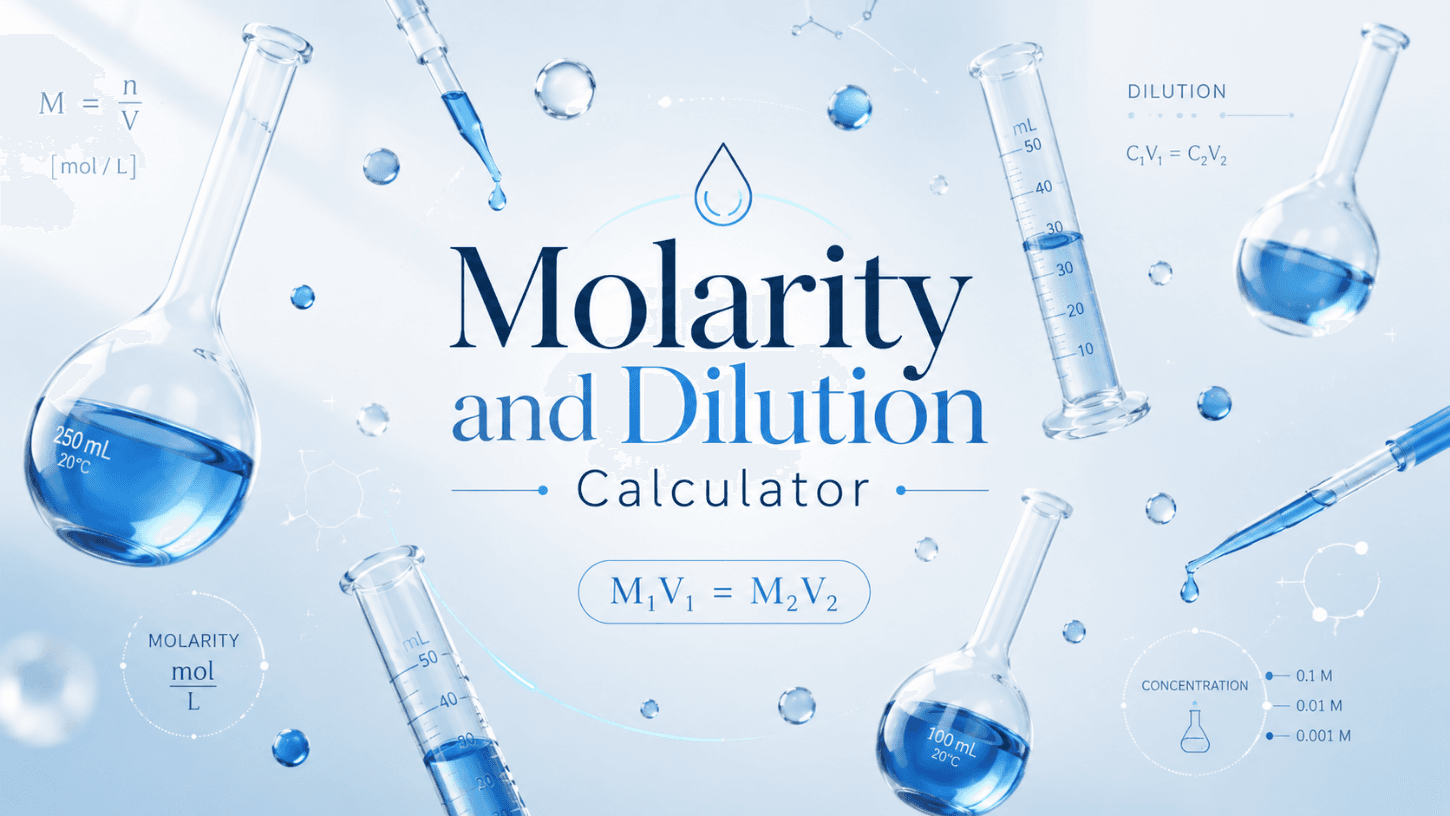
A free molarity and dilution calculator covering four essential lab calculations: C1V1=C2V2 dilution (solve for any unknown), molarity from mass, mass from molarity, and serial dilution table generation. Includes worked examples, a concentration units guide and step-by-step preparation instructions for every result.
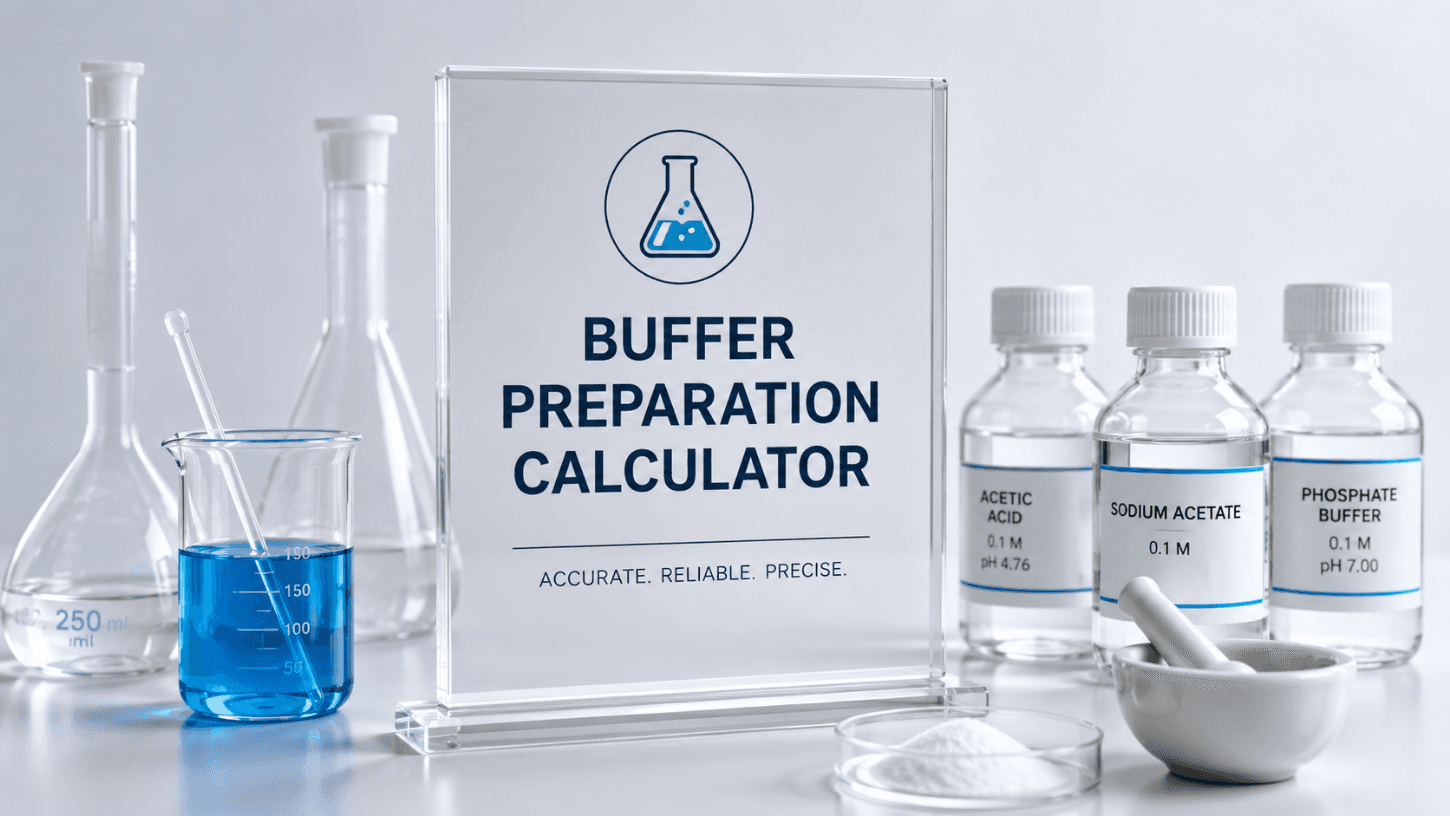
Free online buffer preparation calculator. Select your buffer system, enter target pH, concentration and volume, and get an exact lab-ready recipe with reagent masses and step-by-step instructions. Covers PBS, Tris-HCl, sodium phosphate, acetate, HEPES, MOPS and more.
Laboratory balances are essential weighing instruments used to measure samples, reagents, powders, chemicals and materials with accuracy and consistency. They are commonly used in research, education, quality control, pharmaceutical testing, food testing, industrial laboratories and general scientific workflows.