New
Representative Image

Bimetal crimp caps N 20, blue/silver center hole, Silicone white/PTFE beige, hardness: 45° shore A,thickness: 3 mm, pack of 100

Colour septa

Material septa

Shore hardness

UNSPSC

Specifications

Compare models
HS Code #
39269097
Cap size
ND20
Colour
Blue
Colour septa
White/beige
Material septa
Silicone/PTFE
Shore hardness
40 A
Thickness
3 mm
UNSPSC
41121821
With hole
Yes

NTD 5,057

Inc. VAT

Available soon

Product description

Compare similar models

Bimetal crimp caps N 20, blue/silver center hole, Silicone white/PTFE beige, hardness: 45° shore A,thickness: 3 mm, pack of 100

Manufacturer P/N

702837

Part Number

6.524 194

Manufacturer

Macherey-Nagel

Colour septa

White/beige

N 20 bimetal crimp cap, blue/silver, center hole Silicone blue transparent/centrical PTFE-lamination colorless Hardness: 45° shore A

Manufacturer P/N

702341

Part Number

4.730 531

Manufacturer

Macherey-Nagel

Colour septa

Blue transparent/transparent

Bimetal crimp caps N 20, blue/silver center hole Silicone blue transpar./PTFE colorless Hardness: 40° shore A Thickness: 3 mm, pack of 100

Manufacturer P/N

702834

Part Number

6.492 167

Manufacturer

Macherey-Nagel

Colour septa

Blue transparent/transparent

N 20 bimetal crimp cap, blue/silver, center hole Butyl light gray/PTFE dark gray Hardness: 50° shore A Thickness: 3 mm, pack of 100

Manufacturer P/N

702838

Part Number

4.730 539

Manufacturer

Macherey-Nagel

Colour septa

Light grey/grey

N 20 bimetal crimp cap, blue/silver, center hole, pack of 100

Manufacturer P/N

702833

Part Number

4.730 538

Manufacturer

Macherey-Nagel

Colour septa

-

Insights

Explore
Cleaning Lab Glassware: Removing Stubborn Residue

7 mins read

Cleaning Lab Glassware: Removing Stubborn Residue

Cleaning laboratory glassware properly is essential for accurate, safe, and repeatable lab work. This guide explains how to remove stubborn residue from beakers, flasks, bottles, volumetric glassware, and other lab glassware, including grease, dried salts, biological residue, stains, and burnt deposits. It also covers safe cleaning methods, common mistakes, drying and storage tips, and when damaged glassware should be replaced.
Read full story
How to Calibrate Your Pipettes to ISO 8655 Standards

7 mins read

How to Calibrate Your Pipettes to ISO 8655 Standards

Pipette calibration helps laboratories confirm that liquid handling results remain accurate, repeatable, and traceable. This guide explains how pipettes are calibrated to ISO 8655 standards, including gravimetric testing, environmental control, correct tip selection, volume testing, calibration records, and common mistakes to avoid. It also covers when to use in-house calibration and when an external calibration service may be more suitable.

Read full story
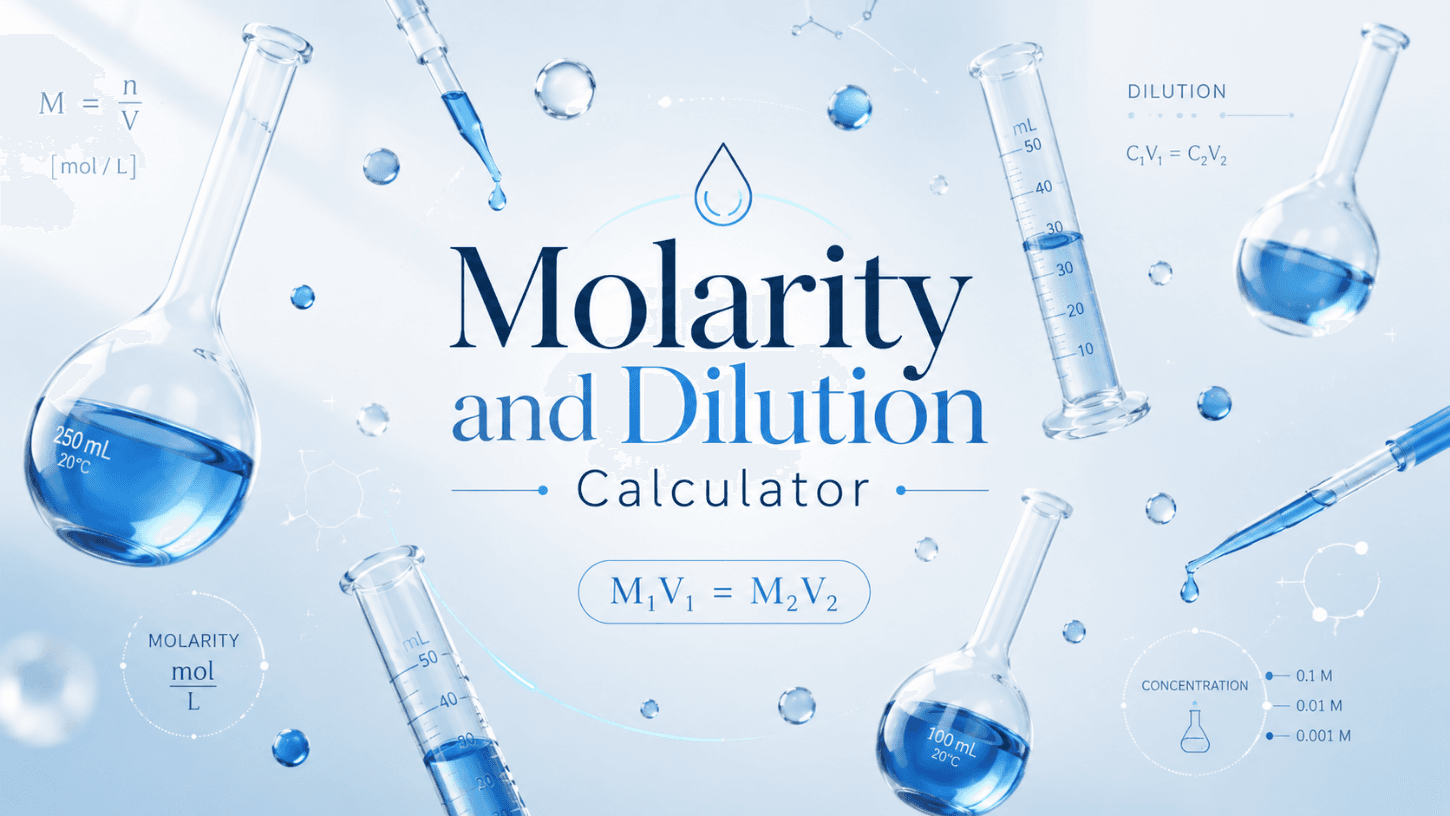
Molarity and Dilution Calculator

9 mins read

Molarity and Dilution Calculator

A free molarity and dilution calculator covering four essential lab calculations: C1V1=C2V2 dilution (solve for any unknown), molarity from mass, mass from molarity, and serial dilution table generation. Includes worked examples, a concentration units guide and step-by-step preparation instructions for every result.

Read full story
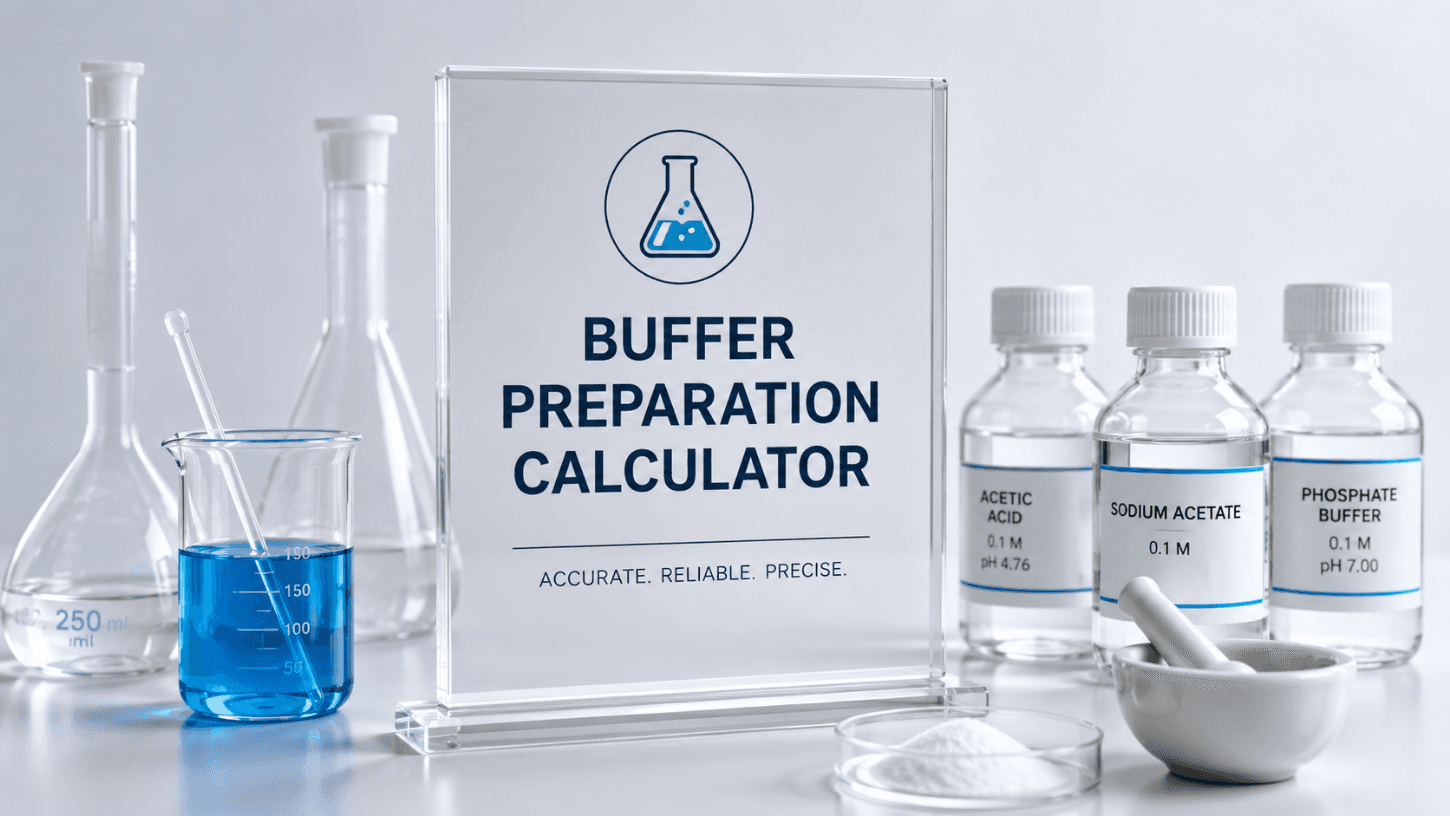
Buffer Preparation Calculator

9 mins read

Buffer Preparation Calculator

Free online buffer preparation calculator. Select your buffer system, enter target pH, concentration and volume, and get an exact lab-ready recipe with reagent masses and step-by-step instructions. Covers PBS, Tris-HCl, sodium phosphate, acetate, HEPES, MOPS and more.

Read full story