Representative Image

Xylem WTW Self-Stirring Oxygen Sensor Stirrox G, without Cleaning Solution 205204 LLG 9822552

Brand:Xylem WTW

Specifications

HS Code #
90279000
Cable length
2 m
Intake capacity
0 ... 50 mg/l (20 °C)
Material shaft
POM
Max. temperature
50 °C
Min. temperature
0 °C
Partial pressure
0 ... 1250 mbar (20 °C)
Saturation
0 ... 600 % (20 °C)
Temperature
0 ... 50 °C
Temperature sensor
NTC 30 kOhm
Type
StirrOx ® G

NTD 70,759

Inc. VAT

Available soon

Product description

The Xylem WTW Stirrox G without Self-Stirring Oxygen Sensor is engineered for precise and reproducible oxygen measurement in both laboratory and field environments. Designed for single-handed operation, this sensor features self-stirring technology, eliminating the need for a polarization period and reducing oxygen consumption for highly accurate results. It is compatible with inoLab® Oxi 730, ProfiLine 197i/1970i, inoLab® 740 Oxi, and inoLab® Oxi 7310 instruments.

Key Features:

  • Brand: Xylem WTW
  • Model: Stirrox G without
  • Type: Self-stirring oxygen sensor
  • Compatibility: For inoLab® and ProfiLine Oxi instruments
  • Performance: No polarization period, low oxygen consumption, and high reproducibility
  • Operation: Single-handed use; ready for immediate measurements
  • Maintenance: 6 months of operation with one electrolyte filling; IMT compensation and membrane leakage monitoring
  • Calibration: No zero-point calibration required

Scope of Supply:

  • Oxygen sensor
  • OxiCal®-ST calibration and storage vessel
  • 3 × exchange membrane heads
  • Electrolyte
  • Abrasive foil

Please note: Cleaning solution must be ordered separately.

This oxygen sensor from Xylem WTW is an essential choice for professionals who demand accuracy, convenience, and long-term reliability in oxygen measurement.

Downloads

Accessories

Accessory package for Oxygen sensor StirrOx® G

ProductTypeUNSPSCMfr#Part#AvailabilityPrice
ZBK ST411156002027107.008 273In stockNTD 16,687

Frequently asked questions

It is engineered for precise and reproducible oxygen measurement in both laboratory and field environments. Designed for single-handed operation, this sensor features self-stirring technology, eliminating the need for a polarization period and reducing oxygen consumption for highly accurate results. It is compatible with inoLab® Oxi 730, ProfiLine 197i/1970i, inoLab® 740 Oxi, and inoLab® Oxi 7310 instruments.

Insights

Explore
Cleaning Lab Glassware: Removing Stubborn Residue

7 mins read

Cleaning Lab Glassware: Removing Stubborn Residue

Cleaning laboratory glassware properly is essential for accurate, safe, and repeatable lab work. This guide explains how to remove stubborn residue from beakers, flasks, bottles, volumetric glassware, and other lab glassware, including grease, dried salts, biological residue, stains, and burnt deposits. It also covers safe cleaning methods, common mistakes, drying and storage tips, and when damaged glassware should be replaced.
Read full story
How to Calibrate Your Pipettes to ISO 8655 Standards

7 mins read

How to Calibrate Your Pipettes to ISO 8655 Standards

Pipette calibration helps laboratories confirm that liquid handling results remain accurate, repeatable, and traceable. This guide explains how pipettes are calibrated to ISO 8655 standards, including gravimetric testing, environmental control, correct tip selection, volume testing, calibration records, and common mistakes to avoid. It also covers when to use in-house calibration and when an external calibration service may be more suitable.

Read full story
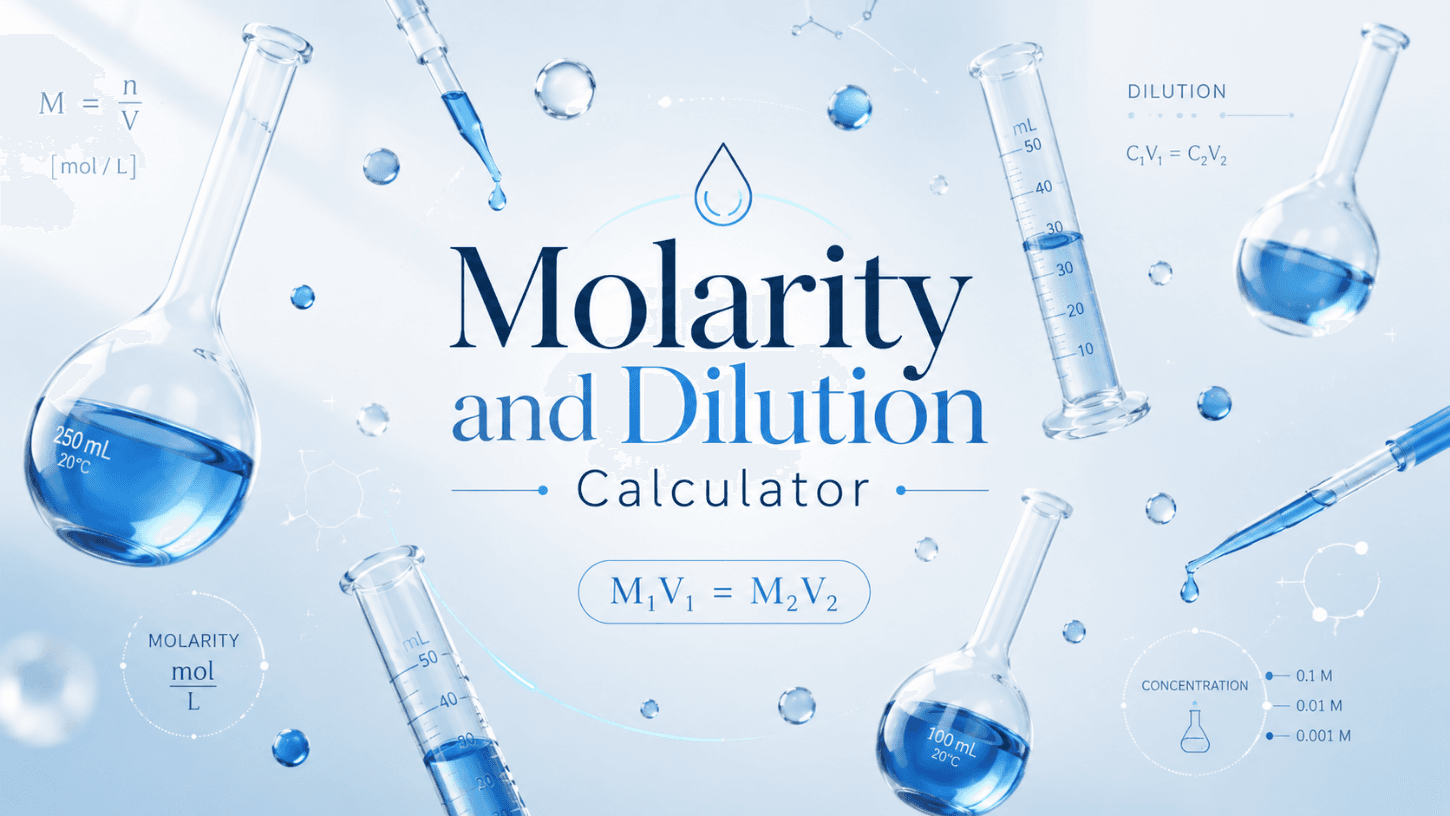
Molarity and Dilution Calculator

9 mins read

Molarity and Dilution Calculator

A free molarity and dilution calculator covering four essential lab calculations: C1V1=C2V2 dilution (solve for any unknown), molarity from mass, mass from molarity, and serial dilution table generation. Includes worked examples, a concentration units guide and step-by-step preparation instructions for every result.

Read full story
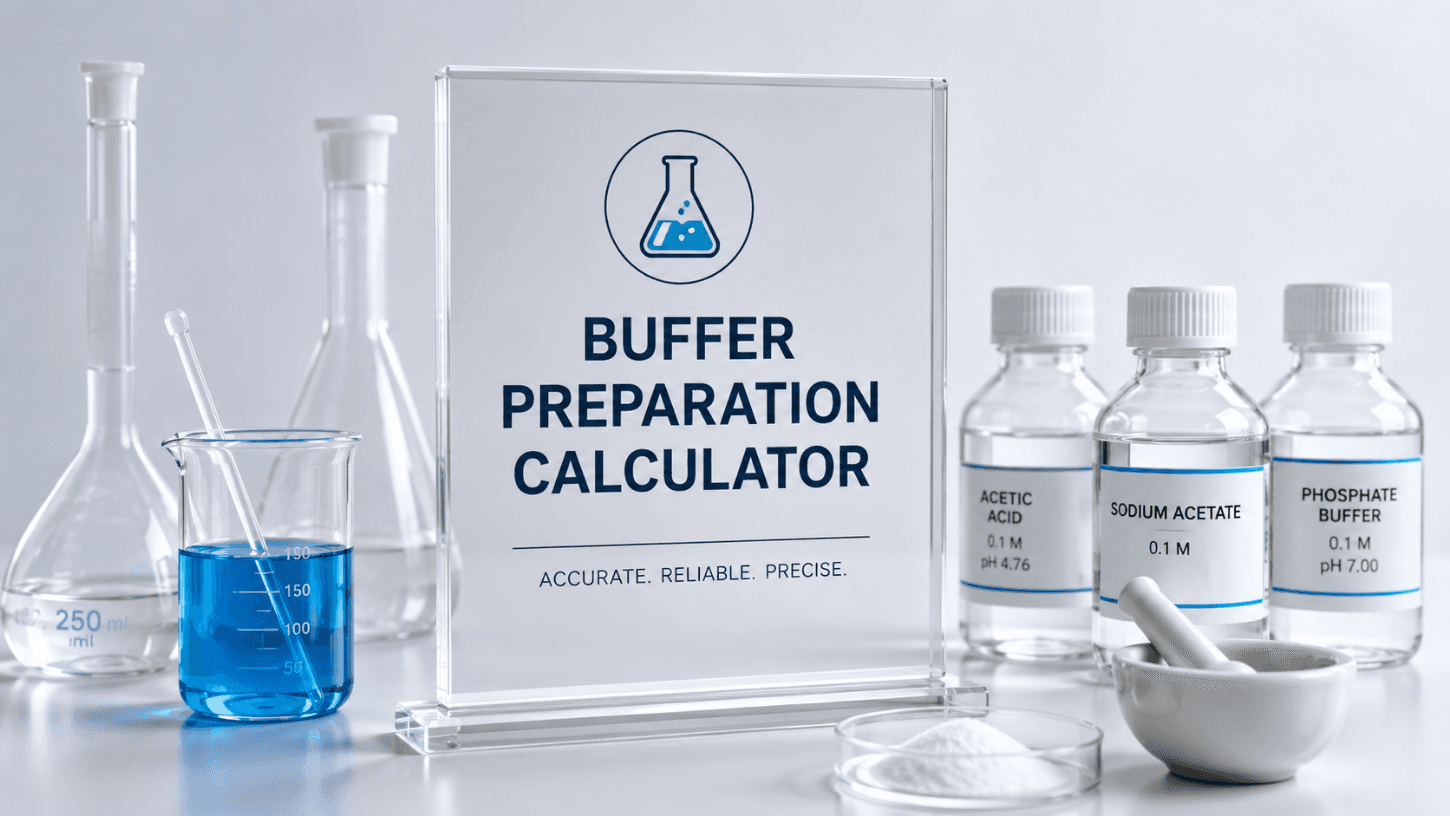
Buffer Preparation Calculator

9 mins read

Buffer Preparation Calculator

Free online buffer preparation calculator. Select your buffer system, enter target pH, concentration and volume, and get an exact lab-ready recipe with reagent masses and step-by-step instructions. Covers PBS, Tris-HCl, sodium phosphate, acetate, HEPES, MOPS and more.

Read full story