Beaker Guide: How to Choose the Right Laboratory Beaker for Your Applications
1 min read
A beaker is a fundamental piece of laboratory equipment used for mixing, heating, and transferring liquids in scientific research and industrial applications. Available in various materials such as borosilicate glass and durable plastic, beakers are essential for safe and efficient handling of chemical solutions and samples. At LabFriend, we offer a wide selection of high-quality laboratory beakers with fast Australia-wide delivery to meet all your research and testing needs.
Introduction
The beaker is one of the most essential and widely used pieces of laboratory equipment. Whether you’re mixing chemical solutions, heating liquids, or performing analytical experiments, a beaker plays a crucial role in ensuring safe and efficient sample handling.
At LabFriend, we offer a wide range of laboratory beakers, including borosilicate glass beakers, plastic beakers, and graduated beakers—ideal for every lab application across Australia.
If you’re searching for the best beaker for your laboratory, this guide will help you understand the different types of beakers, their applications, and how to choose the right one for your needs.
What Is a Beaker?
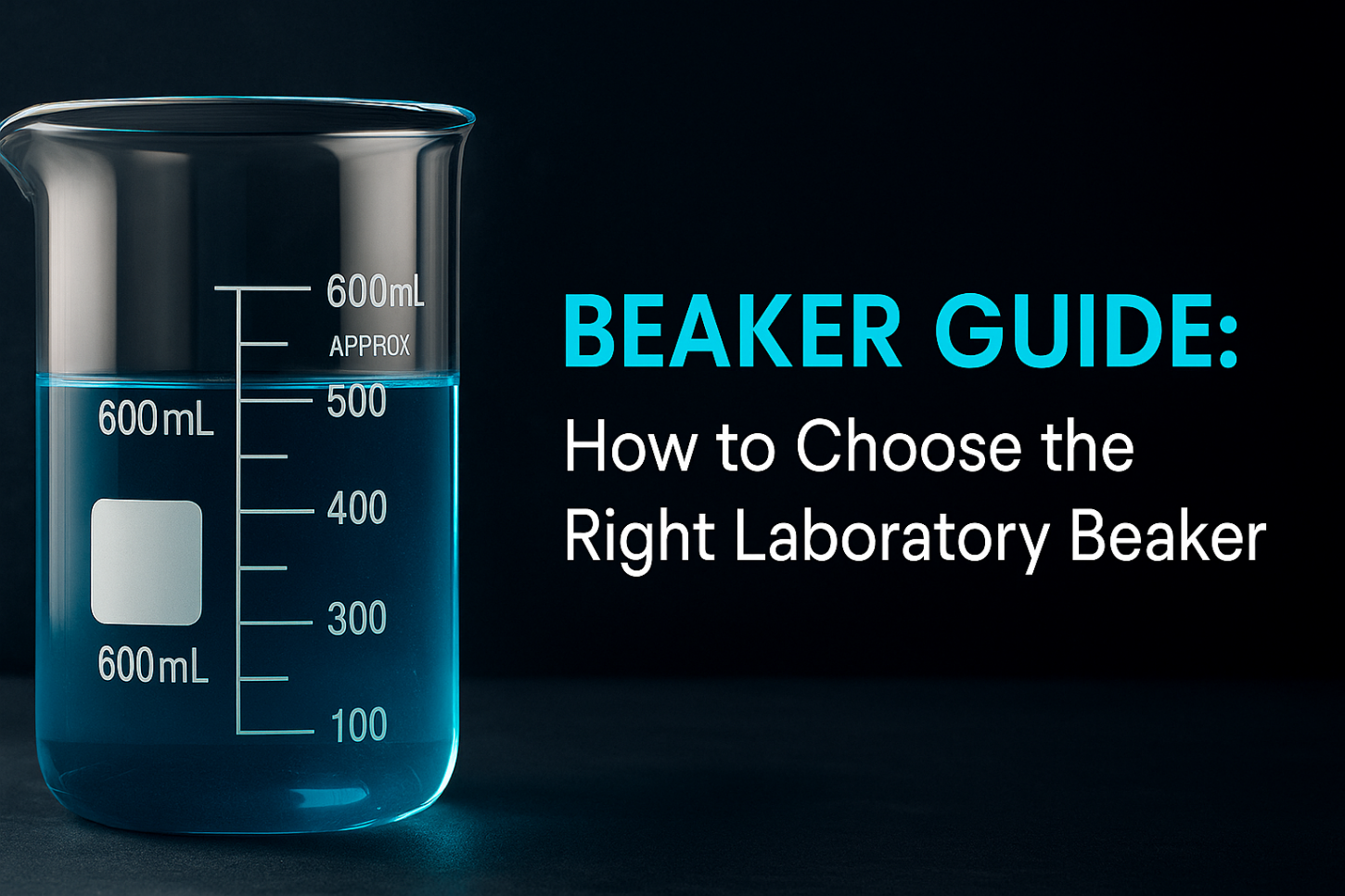
A beaker is a cylindrical laboratory container used to mix, stir, heat, and measure liquids. Designed with a flat bottom and a small spout for easy pouring, beakers are available in various sizes and materials, including borosilicate glass and durable plastic.
While commonly associated with basic liquid handling, beakers are also essential for heating chemicals, conducting reactions, and sample storage in both research laboratories and industrial environments.
Types of Laboratory Beakers
1️⃣ Low-Form Beaker (Griffin Beaker)
-
Most common type of laboratory beaker
-
Short and wide design with a pouring spout
-
Ideal for general mixing, heating, and solution preparation
2️⃣ Tall-Form Beaker (Berzelius Beaker)
-
Taller, narrower profile
-
Used for sedimentation and experiments requiring reduced evaporation
-
Common in analytical and chemical research labs
3️⃣ Graduated Beaker
-
Features volume markings for approximate liquid measurements
-
Useful for quick and rough volume estimations
4️⃣ Plastic Beaker (Polypropylene or PTFE)
-
Lightweight, shatter-resistant, and chemically resistant
-
Suitable for non-heating applications or fieldwork
5️⃣ Borosilicate Glass Beaker
-
Highly resistant to thermal shock and chemicals
-
Suitable for direct heating on hot plates or open flames
-
Preferred in chemistry, pharmaceuticals, and food testing industries
How to Choose the Right Beaker
Selecting the right laboratory beaker depends on your specific application:
✔ Material
-
Choose borosilicate glass beakers for heating and chemical resistance.
-
Select plastic beakers for lightweight, general-purpose use.
✔ Volume Capacity
Beakers are available in sizes from 50 mL to 2000 mL. Always select a beaker with enough capacity to handle your liquid volume safely, allowing space for mixing without spilling.
✔ Graduation Accuracy
If precise volume measurement is required, pair your beaker with a graduated cylinder or volumetric flask. Beakers provide approximate measurements but aren’t designed for analytical precision.
✔ Heat Resistance
Ensure that your beaker is rated for the temperature ranges used in your experiments, particularly when working with hot plates or direct flames.
Common Laboratory Applications of Beakers
-
Preparing and mixing chemical solutions
-
Heating liquids for reactions
-
Holding samples for titrations and analyses
-
Performing simple distillation and boiling tests
-
Collecting and storing liquids safely
💡 Tip: While beakers are versatile, always use appropriate laboratory glassware for precision measurement.
Why Choose LabFriend for Your Laboratory Beakers?
At LabFriend, we supply a complete range of laboratory beakers to suit every application, including:
-
Borosilicate Glass Beakers – Resistant to thermal shock and ideal for high-temperature experiments.
-
Graduated Beakers – For quick and approximate liquid measurements.
-
Plastic Beakers – Lightweight and chemical-resistant, perfect for field and educational use.
With fast Australia-wide delivery and products from trusted global brands, LabFriend ensures that your laboratory is equipped with the highest-quality beakers for safe and reliable performance.
🔍 Shop laboratory beakers now: Click here to explore the full range
Final Thoughts
The beaker may seem like a simple tool, but it plays a vital role in laboratory workflows. From basic liquid handling to complex chemical reactions, choosing the right beaker improves experiment accuracy, safety, and efficiency.
Explore our range of high-quality beakers at LabFriend and find the perfect solution for your laboratory needs—delivered fast across Australia.
🔬 Ready to elevate your lab work? Explore now at LabFriend
Frequently asked questions
Most orders ship within 24 hours and arrive in 3–5 business days depending on your location.
_0.png&w=3840&q=75)