New
Representative Image

Incubator Genie 230 V, with european plug

Brand:OHAUS

Specifications

HS Code #
84191900
Accuracy temperature
±1.0 °C
Accuracy temperature
1.0 °C
Depth
400 mm
Depth moving table
203 mm
Dimensions (WxDxH)
560 x 400 x 260 mm
Power supply frequency
50/60 Hz
Height
260 mm
Max. loading capacity
4.5 kg
Max. permitted ambient temp.
38 °C
Max. relative humidity rate
95 %

NTD 195,229

Inc. VAT

Available soon

Product description

This device is incubator, rotator and shaker in one compact unit. It is ideal for the study of microorganisms and tissue cell growth under strictly controlled conditions of temperature and agitation. Peltier technology ensures high degree of accuracy, uniformity and stability.

  • With LED display for temperature and speed

  • Magnetic stainless steel platform may be easily set to rock or rotate almost any container

  • A variety of accessories are available to provide maximum application versatility

  • Chamber air is gently and continuously re-circulated ensuring temperature consistency and uniformity

  • Shatterproof window allows for inspection of samples without disturbing chamber environment

  • Optional available: Horizontal orbital attachment for Western Blots and maintaining cells or solutions in suspension

  • With visible and audible alarm for temperature


Scope of supply: Incubator, 1 x magnetic platform, 1 x clip plate each for 10 to 13 mm, 15 to 17 mm, 28 to 30 mm tubes, 4 x bag mounting strips, 1 x non-skid tray, 1 x wire rack

Insights

Explore
Cleaning Lab Glassware: Removing Stubborn Residue

7 mins read

Cleaning Lab Glassware: Removing Stubborn Residue

Cleaning laboratory glassware properly is essential for accurate, safe, and repeatable lab work. This guide explains how to remove stubborn residue from beakers, flasks, bottles, volumetric glassware, and other lab glassware, including grease, dried salts, biological residue, stains, and burnt deposits. It also covers safe cleaning methods, common mistakes, drying and storage tips, and when damaged glassware should be replaced.
Read full story
How to Calibrate Your Pipettes to ISO 8655 Standards

7 mins read

How to Calibrate Your Pipettes to ISO 8655 Standards

Pipette calibration helps laboratories confirm that liquid handling results remain accurate, repeatable, and traceable. This guide explains how pipettes are calibrated to ISO 8655 standards, including gravimetric testing, environmental control, correct tip selection, volume testing, calibration records, and common mistakes to avoid. It also covers when to use in-house calibration and when an external calibration service may be more suitable.

Read full story
Molarity and Dilution Calculator

9 mins read

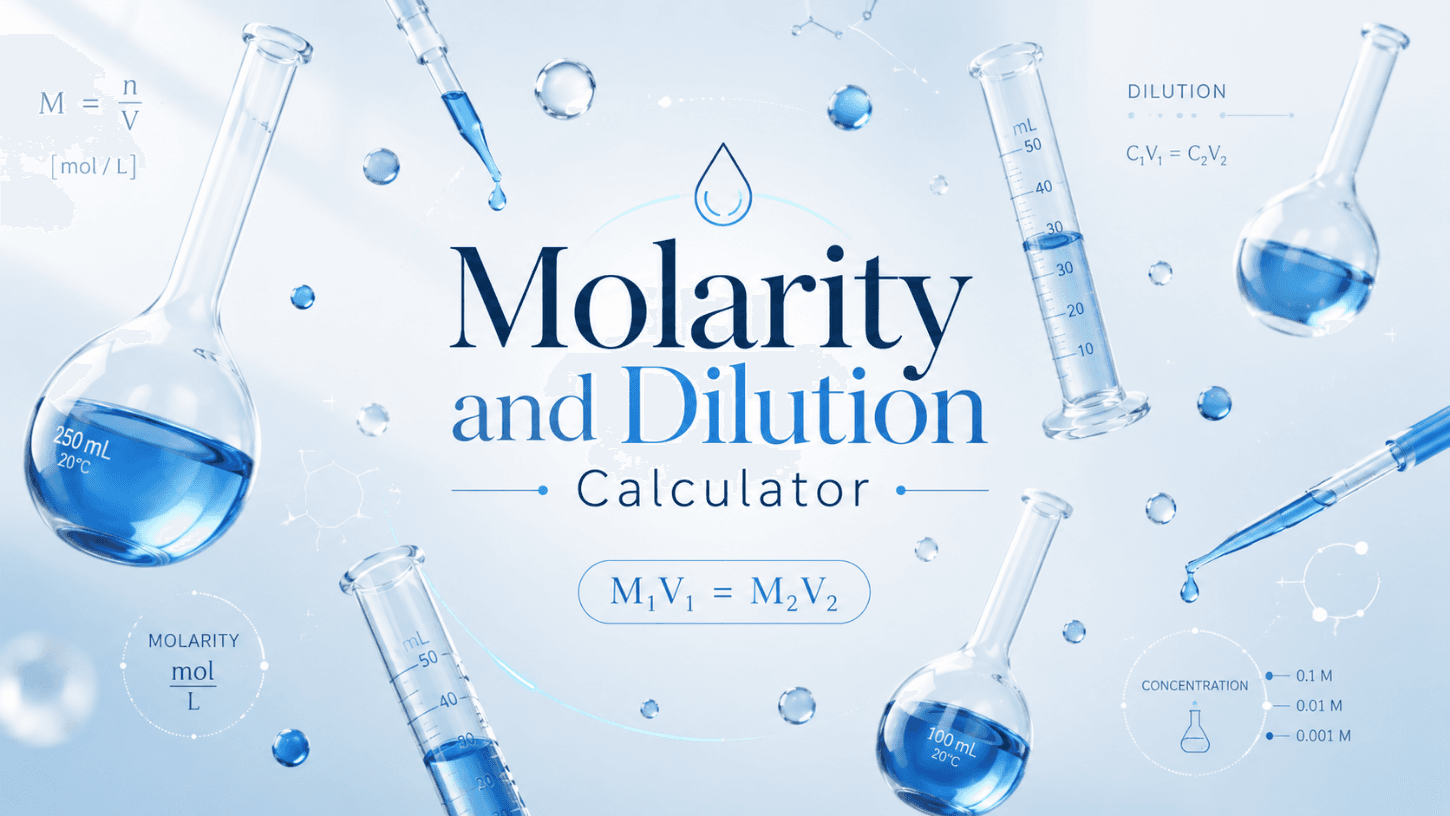
Molarity and Dilution Calculator

A free molarity and dilution calculator covering four essential lab calculations: C1V1=C2V2 dilution (solve for any unknown), molarity from mass, mass from molarity, and serial dilution table generation. Includes worked examples, a concentration units guide and step-by-step preparation instructions for every result.

Read full story
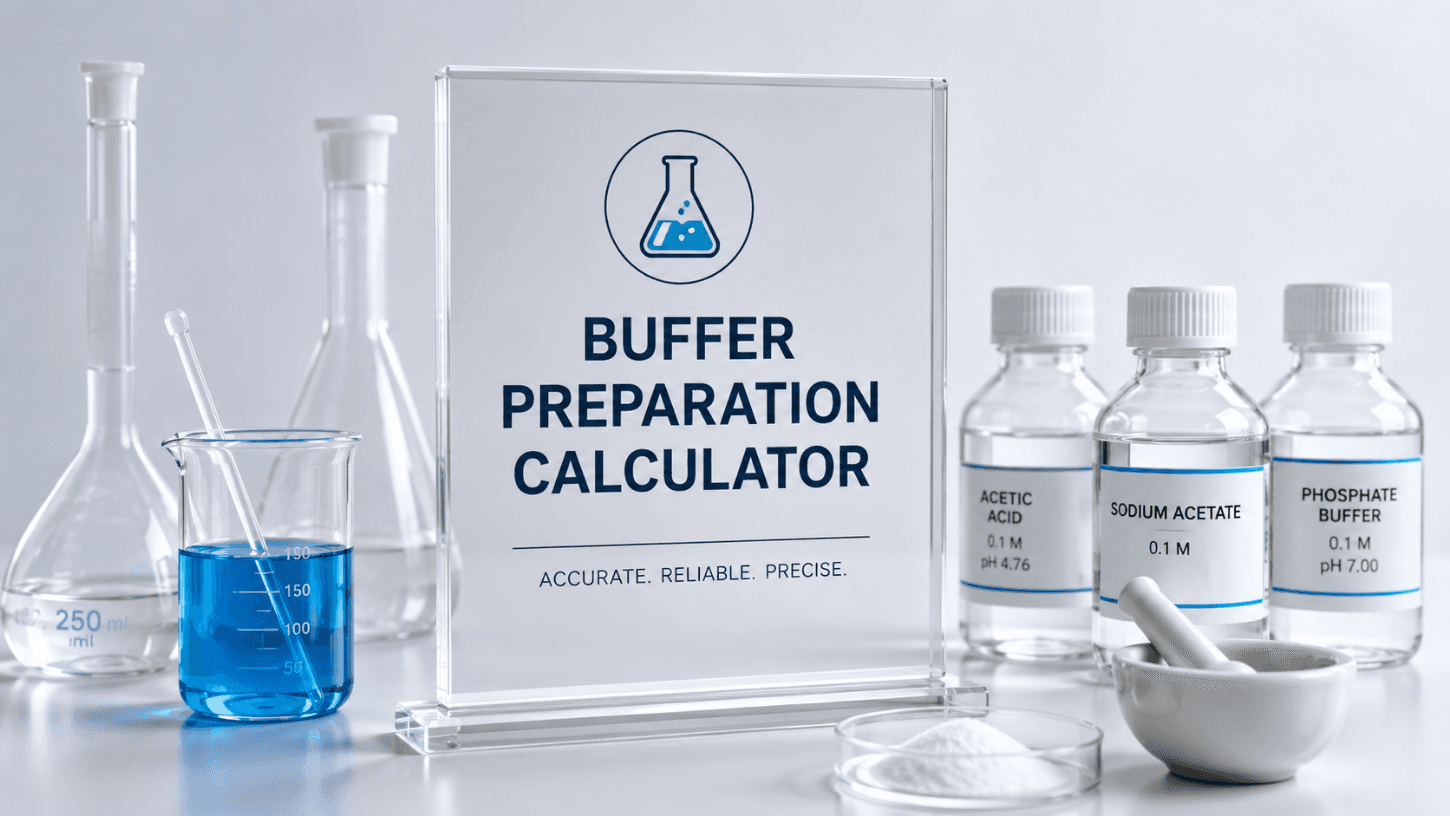
Buffer Preparation Calculator

9 mins read

Buffer Preparation Calculator

Free online buffer preparation calculator. Select your buffer system, enter target pH, concentration and volume, and get an exact lab-ready recipe with reagent masses and step-by-step instructions. Covers PBS, Tris-HCl, sodium phosphate, acetate, HEPES, MOPS and more.

Read full story