Representative Image

A. Krüss MBL 2000-LED, Binocular Microscope, 10x Eyepieces, Planocular Achrom. Objectives, 4x, 10x, 40x, 100x

Brand:KRÜSS

Specifications

Condenser
ABBE NA 1,25
Depth
230 mm
Dimensions (WxDxH)
190 x 230 x 400 mm
Power supply frequency
50/60 Hz
Height
400 mm
Interpupillary distance
55 ... 75 mm
IP code
IP 20
Light type
LED
Magnification eyepieces
10x
Magnification objectives
4x, 10x, 40x, 100x

NTD 37,276

Inc. VAT

Available soon

Product description

The A. Krüss Binocular Microscope MBL 2000-LED, 10x Eyepieces, Planocular Achromatic Objectives 4x, 10x, 40x and 100x is designed for biological examinations, including studies on animals, plants, microorganisms and cell cultures. With a robust metal stand, LED illumination and double-lens ABBE condenser, it supports reliable routine microscopy in laboratory and educational environments.

Key Features:

  • Brand: A. Krüss
  • Model: MBL 2000-LED
  • Microscope Type: Binocular microscope
  • Eyepieces: 10x
  • Objectives: Planocular achromatic objectives 4x, 10x, 40x and 100x
  • Stage: Graduated XY mechanical stage with coaxial operation and height adjustment
  • Focus: Coarse and fine drive, coaxial on both sides
  • Illumination: Low-voltage LED illumination with light control and removable pre-condenser
  • Condenser: Double-lens ABBE condenser, NA 1.25 with iris diaphragm
  • Filters: Blue, yellow and green glass filters with retractable filter holder
  • Application: Biological examinations, animal and plant studies, microorganisms and cell cultures

This binocular microscope is a practical choice for laboratories and teaching environments requiring stable, versatile and easy-to-use microscopy for biological sample observation.

Frequently asked questions

The MBL 2000-LED is designed for biological examinations, animal and plant studies, microorganisms and cell cultures. The stated format and features make the product suitable for routine laboratory work within that application.

Insights

Explore
Cleaning Lab Glassware: Removing Stubborn Residue

1 min read

Cleaning Lab Glassware: Removing Stubborn Residue

Cleaning laboratory glassware properly is essential for accurate, safe, and repeatable lab work. This guide explains how to remove stubborn residue from beakers, flasks, bottles, volumetric glassware, and other lab glassware, including grease, dried salts, biological residue, stains, and burnt deposits. It also covers safe cleaning methods, common mistakes, drying and storage tips, and when damaged glassware should be replaced.
Read full story
How to Calibrate Your Pipettes to ISO 8655 Standards

1 min read

How to Calibrate Your Pipettes to ISO 8655 Standards

Pipette calibration helps laboratories confirm that liquid handling results remain accurate, repeatable, and traceable. This guide explains how pipettes are calibrated to ISO 8655 standards, including gravimetric testing, environmental control, correct tip selection, volume testing, calibration records, and common mistakes to avoid. It also covers when to use in-house calibration and when an external calibration service may be more suitable.

Read full story
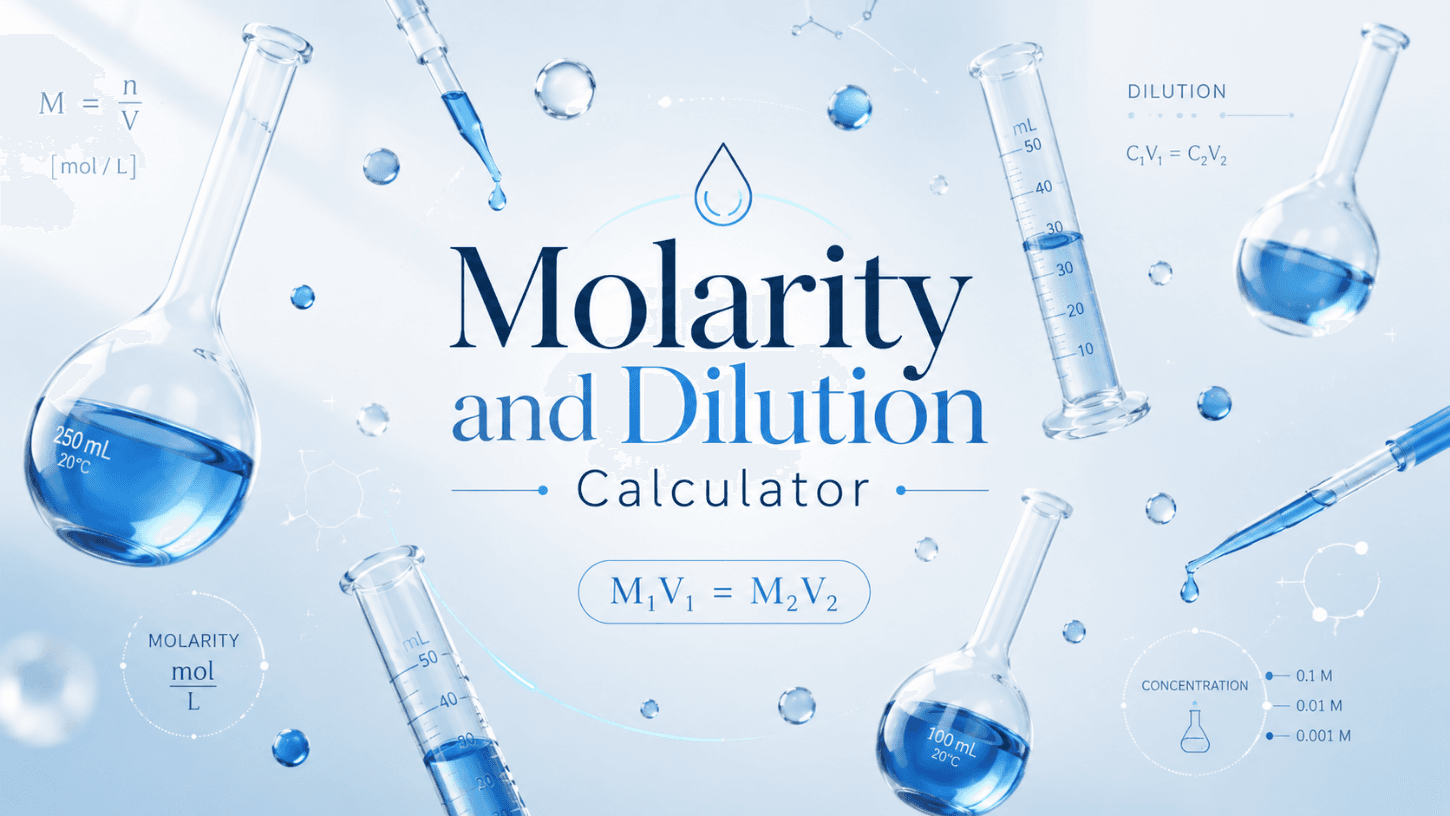
Molarity and Dilution Calculator

1 min read

Molarity and Dilution Calculator

A free molarity and dilution calculator covering four essential lab calculations: C1V1=C2V2 dilution (solve for any unknown), molarity from mass, mass from molarity, and serial dilution table generation. Includes worked examples, a concentration units guide and step-by-step preparation instructions for every result.

Read full story
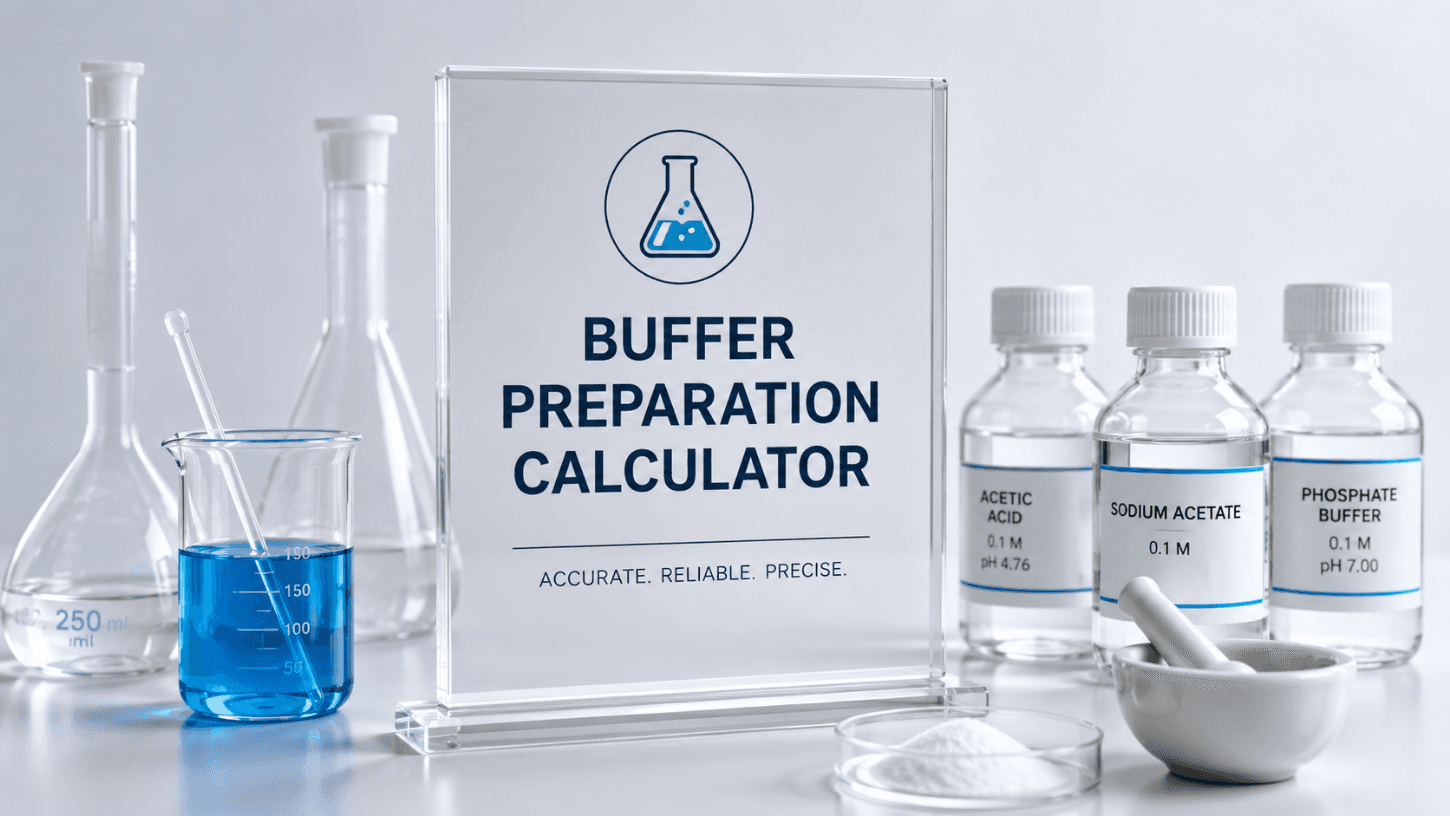
Buffer Preparation Calculator

1 min read

Buffer Preparation Calculator

Free online buffer preparation calculator. Select your buffer system, enter target pH, concentration and volume, and get an exact lab-ready recipe with reagent masses and step-by-step instructions. Covers PBS, Tris-HCl, sodium phosphate, acetate, HEPES, MOPS and more.

Read full story

NTD 37,276

Inc. VAT