8 Common Hotplate Stirrer Mistakes (and How to Avoid Them)
1 min read
This guide addresses a critical gap in laboratory safety: the misuse of heating and stirring equipment. Despite being everyday tools, heating devices are responsible for nearly 25% of all laboratory fires according to 2026 data from the National Fire Protection Association (NFPA) and Penn EHRS. We break down the eight most frequent errors—ranging from using incompatible soda-lime glassware to neglecting external temperature probes—and provide actionable, source-backed solutions. By following these protocols and utilizing high-performance equipment from brands like DWK Life Sciences, IKA, and Velp, researchers can ensure a safer, more efficient, and highly reproducible laboratory environment.
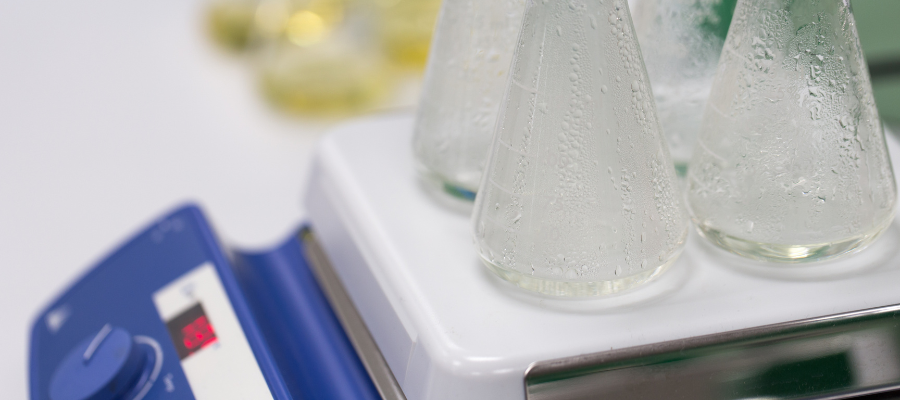
The hotplate stirrer is a foundational tool in any scientific environment, from high-school chemistry labs to advanced pharmaceutical R&D facilities. However, because they are so common, they are often the most misused pieces of equipment. In fact, laboratory heating equipment remains a leading cause of fires and accidents in research facilities worldwide.
As of 2026, safety data from the National Fire Protection Association (NFPA) and university safety offices (including Penn EHRS and Wayne State) confirm that heating equipment is responsible for nearly 25% of all laboratory fires (University of Pennsylvania EHRS). Most of these incidents are preventable and stem from equipment being left unattended, faulty wiring in older models, or the improper use of flammable materials near heat sources. By avoiding the following eight common mistakes, you can significantly enhance your lab’s safety profile and ensure the reproducibility of your experiments.
1. Using Incompatible Glassware
One of the most dangerous mistakes is heating non-borosilicate glass on a hotplate. Standard soda-lime glass has a high Coefficient of Thermal Expansion ($9.0 \times 10^{-6} K^{-1}$), meaning it expands rapidly when heated, often leading to catastrophic failure (Wikipedia: Borosilicate Glass).
Always ensure you are using DWK Life Sciences DURAN® or similar Borosilicate 3.3 glass, which can withstand temperature differentials ($\Delta T$) of up to 160°C. According to the Wayne State University OEHS, you should never heat thick-walled glassware like jars, bottles, or cylinders directly on a hotplate, as they are prone to thermal stress. For more on glass types, see our comprehensive guide to laboratory glassware.
2. Incorrect Stir Bar Selection
A common efficiency-killer is "spinout," where the magnetic stir bar loses its coupling with the internal drive magnet. This usually happens because the bar is either too long or too short for the vessel. A general rule for magnetic stir bars is that the bar's length should be approximately 60% to 80% of the vessel’s bottom diameter (Fisher Scientific: Stir Bar Selection Guide).
Additionally, consider the shape of your vessel. While cylindrical bars are great for flat-bottomed beakers, oval or elliptical stir bars are required for round-bottom flasks to ensure they follow the curve of the glass without rattling. Using the wrong shape increases drag and can even cause the magnet to scrape and damage the internal surface of the glass, leading to contamination (Chemistry Stack Exchange Research).
3. Heating Flammable Solvents Outside a Fume Hood
Most commercial hotplate stirrers are not explosion-proof. This means that if you are heating volatile solvents like diethyl ether or acetone, a single spark from the internal thermostat can ignite the vapors. According to the American Chemical Society (ACS), heating flammable liquids without proper ventilation is a top-tier safety violation.
If your application requires heating volatile chemicals, always operate your hotplate stirrer inside a certified fume hood. For extreme environments, consider investing in specialized explosion-proof hotplates or stir-only units from brands like IKA or Velp that are designed for hazardous atmospheres (UC San Diego: Heating Reactions Safety).
4. Neglecting the Temperature Probe (External Control)
Many users rely solely on the hotplate’s surface temperature dial. However, the temperature of the ceramic top is often significantly higher than the actual temperature of your solution sometimes reaching as high as 540°C on high settings. This lag can lead to "overshooting," which can degrade sensitive biological samples or trigger unwanted side reactions.
To avoid this, always use an external temperature probe (such as a PT1000 sensor). Modern digital hotplates allow you to plug this probe directly into the unit, shifting the feedback loop to the liquid itself rather than the plate surface. This ensures a precision of $\pm 0.5°C$, which is essential for analytical chemistry workflows (UChicago: Hot Plate Lessons Learned).
5. Using Plasticware or Metal Containers Improperly
While some modern polymers can handle moderate heat, placing standard plastic containers on a hotplate is a recipe for a toxic mess. Even "heat-resistant" plastics like PMP (Polymethylpentene) have a limited service temperature. Plasticware that is not specifically rated for high heat can melt or release harmful fumes (Asynt Safety Blog).
Similarly, avoid placing aluminum foil or metal pans directly on a ceramic hotplate top. Metal can reflect heat back into the unit, causing the internal electronics to overheat and fail prematurely (Wayne State: Hot Plate Safety). Always stick to borosilicate beakers or specialized stainless steel heating blocks designed for the task.
6. Leaving Units Plugged In and Unattended
Reports from Penn EHRS have confirmed that older analog hotplates (manufactured before 1984) can spontaneously turn on due to internal component failure. In many cases, turning the unit "off" does not actually disconnect the heater from the electrical source (ACS Chemical Health & Safety: Runaway Hot Plates).
The Fix: Disconnecting the hotplate from power is the only way to ensure that a processor glitch will not result in spontaneous heating. Always unplug your unit at the end of the work day. If an experiment must run overnight, use only modern digital units with independent safety circuits (like the IKA RCT Basic) that automatically cut power if the temperature exceeds a pre-set safety limit (University of Pennsylvania Safety Advisory).
7. Obstructing Airflow and Overcrowding the Workspace
Hotplates generate significant heat and need adequate ventilation to prevent the accumulation of heat around the motor. Placing a hotplate too close to the back wall of a fume hood or surrounding it with combustible materials (like paper towels or plastic tubing) creates a fire hazard.
Maintain at least 15cm (6 inches) of clearance around the unit. Furthermore, ensuring your hotplate/stirrer is on a level surface is critical; an uneven surface can lead to the stir bar rattling or the vessel sliding off during high-speed stirring (Cole-Parmer: Recognizing Hot Plate Hazards).
8. Failing to Clean Spills Immediately
Spills aren't just messy; they are corrosive. If acidic or alkaline solutions seep into the internal housing of the stirrer, they can damage the motor and the magnetic drive. Corrosive vapors can also degrade the ceramic coating of the top plate, leading to uneven heating and eventual plate failure.
Cleaning Tip: Once the plate is cool, clean it with a mild detergent and a soft cloth. For stubborn residue on ceramic tops, use a non-abrasive plastic scraper. Never use steel wool or harsh abrasives, as scratches can lead to thermal stress points that may cause the ceramic to crack over time.
Conclusion: Quality Equipment Leads to Safer Science
Avoiding these eight mistakes is the easiest way to improve lab safety and equipment longevity. At LabFriend, we recommend choosing high-quality hotplate stirrers from trusted brands like IKA, Velp, Heidolph, and Stuart, which feature built-in safety warnings and digital precision.
Shop our full range of Hotplate Stirrers and Accessories at LabFriend
Need help selecting the right stirrer for your viscosity? Our technical team is ready to assist you with the latest specifications for 2026.
Frequently asked questions
Most orders ship within 24 hours and arrive in 3–5 business days depending on your location.
_0.png&w=3840&q=75)